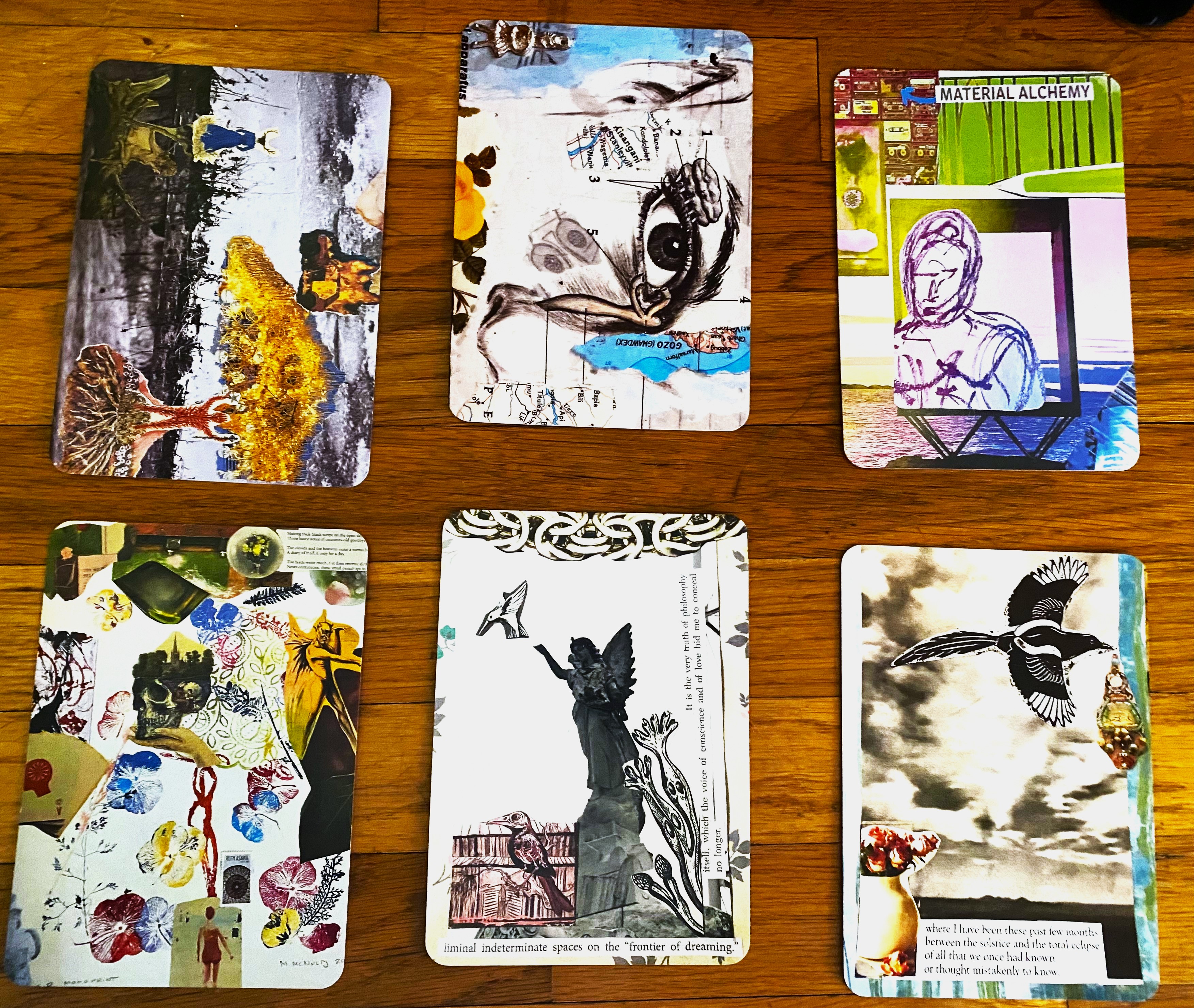
available for purchase at https://forms.gle/M9mFSBB8PkpBx4PN9
Currere Cards[1]
“Paradox and contradiction are the mysteries of the soul. The weird and the uncanny are sources of knowledge. To know the self … one must open the heart wide and search every part ” (bell hooks, 1995, p. 17).
About This Tarot Deck
The Currere tarot deck was created by educator and artist Morna McDermott McNulty. It emerged as part of a creative ‘experiment’ in which she explored what a traditional research question would look like if she replaced standard research methods with the elements of chance and ‘fate’. Research is about asking and answering questions. So is tarot reading. These cards are designed using 22 original pieces of collage art. Like a traditional tarot deck, the Currere cards include 22 concepts in keeping with the major arcana. Unlike a traditional tarot deck, the front of each card is unique and distinct. The themes of each card differ from the traditional tarot archetypes, and instead each card includes an idea, concept, or theme relative to curriculum theory and qualitative inquiry.
How to Use These Cards
The term currere comes from a field of curriculum theory (Pinar, 2004) which embraces the notion that curriculum is a series of interconnected “lived experiences” that transcends formal educational and schooling boundaries and emphasizes broader self-examination. Currere is a means for making sense of our lives using a four-phase framework. Through the four phases (theregressive, the progressive, the analytical, and the synthetic) we make sense and meaning of the larger questions regarding our individual and shared experiences. Currere is a “process of turning inward … to a generalized inner-centeredness and hopefully initiate or further the process of individuation, leading to a gradual formation of the transcendental ego” (Pinar, 1975, p. 410).
Using the Currere Cards is a way to inquire about something using a blend of the four-phase currere process with elements of randomness, synchronicity, serendipity, and chance. A card reading ‘maps’ your experiences as a moving landscape traced with aesthetic and sensory hues, ruptures of memory, and overlays of the imagination. The relationships between the cards alter forms within their relationships to persons, places, and moments. This process invites investigations that seek revelations rather than proof. Card readings invite the question: If everything connects to everything else, how does the randomness of the assemblage perhaps create something of meaning?
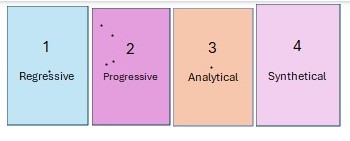
Four Phases of Currere Explained:
The regressive: Turn to the autobiographical and educational past
The progressive: Turn toward the imagined future and multiple possibilities
The analytical: Turn toward folding the past, present, and future together in a single moment.
The synthetic: Bringing it all together. How does the autobiographical intersect with a broader web of social economic, political, and spiritual contexts?
Ways to Conduct a Reading
Option One:
Shuffle the cards in your hands while silently asking yourself a central question. Imbue the cards with your energy and set an intention for the reading. Spread the cards out so that each one is at least partially visible. Quickly (do not over think it!!) pull the cards that you feel visually drawn to and lay them out in the sequence according to the spread you have selected (see options below). Turn the cards over in the numbered order designated by the spread selected (card 1, card 2, etc.).
Option Two:
This is recommended if you have become familiar with the meaning of each image and its correlating concept so that bias will affect the randomness of the spread. Handle the deck similarly to the directions in Option One. Instead of making a broad spread and selecting cards, shuffle the cards several times. Working from the top card, pull them off in the order they appear, and lay them out according to the selected spread. Turn the cards over for a “reading” according to the numbered order designated by the spread.
Suggested Spreads
Currere Spread. Good for exploring the broad relationships between your past, present and future.
Using option 1 or 2, pull the cards in the following sequence:
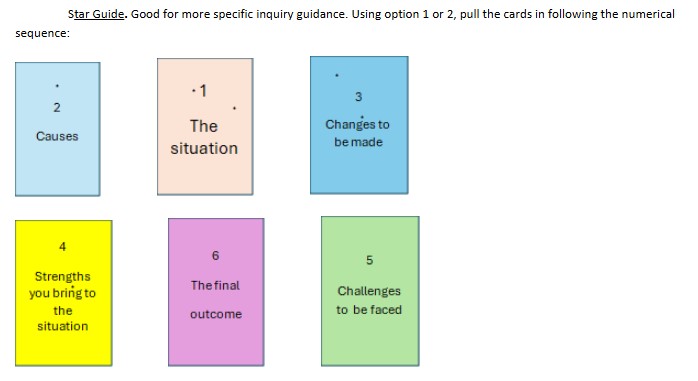
Star Spread. Good for more specific inquiry guidance. Using Option One or Two, pull the cards in following the numerical sequence:
The Themes of Each Card
List of the 22 concepts/phrases for each of the 22 cards (These terms go on the other side of the corresponding image). Numbered here in no particular order:
1. Corporeal Also: haunting, embodiment / 2. Imagination Also: creativity, artful expression 3. Epistemology Also: knowing, knowledge / 4. Love Also: passion, romantic, platonic / 5. The Palimpsest — traces of language and revision beneath the surface Also: looking beneath first appearances, revisions / 6. The Gift Also: purpose, goal / 7. Wonder Also: awe, surprise, joy 8. Illumination Also: insight / 9. The senses Also: aesthetic, sensory / 10. Spirit Also: soul, quest 11. Memory Also: past, present, future, synthesis / 12. Place Also: belonging 13. Water Also: mystery, flow, movement / 14. Earth Also: feral, elemental, nature, steady / 15. Perception Also: visual communication / 16. Justice Also: equilibrium, liberation / 17. Time Also: linear, circular, synchronicity / 18. Fire Also: energy, rebirth, transformation /19. Identity Also: self/other, human/ahuman / 20. Ontology Also: being, becoming / 21. Techne Also: human-constructed, manufactured / 22. Searching Also: reaching, looking, quest
 educationalchemy